🇬🇧 FREE UK POSTAGE — DISPATCHED FROM THE UK • 1000+ Happy Customers

Summer in the UK means one thing for a lot of families: garden water fights. But if you’ve shopped for a water gun recently, you’ll have noticed the market has changed a lot from the simple pump-action blasters of years past. Alongside traditional water guns, there’s now a growing range of electric water guns — rechargeable, motor-powered blasters that promise more power and less effort.
So which one is actually worth buying? Here’s a full breakdown of how electric water guns and traditional water guns compare, so you can pick the right one for your next backyard battle.
How Traditional Water Guns Work
Traditional water guns rely on manual pump action. You draw water into an internal chamber by pulling back a pump or plunger, building up pressure, and then release it through the trigger to fire a stream or spray. The harder and faster you pump, the more pressure builds — which means more effort from the user, especially with larger tanks.
This mechanism has been around for decades, and it’s simple, reliable, and doesn’t rely on batteries or charging. But it does have real limitations, particularly around consistency and physical effort during extended play.
How Electric Water Guns Work
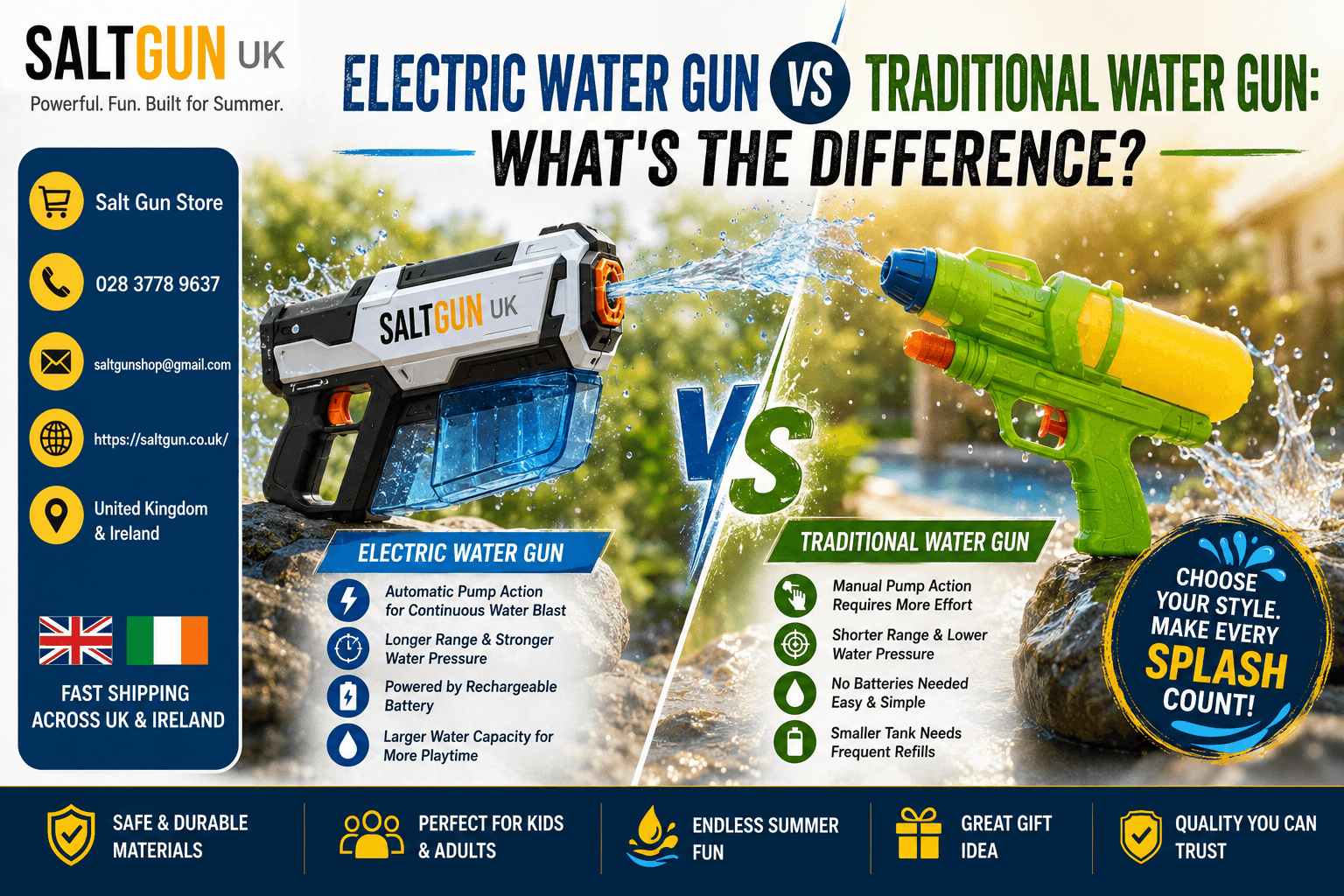
Electric water guns replace manual pumping with a battery-powered pump system. Instead of physically building pressure yourself, you simply press the trigger and the internal motor does the work, drawing water from the tank and firing it out continuously. Most models, including those from Salt Gun Store, use rechargeable batteries that top up via USB, so there’s no need for disposable batteries.
This shift from manual to motorised firing is the single biggest difference between the two types of water guns, and it has a knock-on effect on almost every other aspect of performance.
Power and Distance
This is where electric water guns tend to pull ahead. Because the firing pressure comes from a consistent motor-driven pump rather than however hard you managed to pump by hand, electric models typically deliver a steadier, more powerful stream with better range. Traditional water guns can achieve strong bursts too, but the power depends heavily on how much effort goes into pumping — and that effort tends to drop off quickly during a long water fight.
Ease of Use
Manual pumping requires physical effort every time you want to fire, which can be tiring for younger children or during long play sessions. It also means a slight pause between pumping and firing, which can put you at a disadvantage in a fast-paced water fight.
Electric water guns remove that friction entirely. Press the trigger and you’re firing — no pumping, no build-up, no pause. This makes them noticeably easier for kids to use continuously, and generally more enjoyable for players who want fast, repeated shots rather than the stop-start rhythm of manual pumping.
Water Capacity and Play Time
Both types of water guns come in a range of tank sizes, so capacity itself isn’t strictly tied to whether a gun is electric or traditional. However, electric models are often designed with larger reservoirs in mind, since the motor removes the physical strain that would otherwise come from pumping a bigger tank. This generally means longer play sessions between refills, particularly with higher-capacity electric blasters.
Maintenance and Battery Life
Here’s where traditional water guns have an edge: there’s nothing to charge, no battery to manage, and no motor components that could eventually wear out. As long as the pump mechanism and seals are in good condition, a traditional water gun will keep working indefinitely.
Electric water guns need to be charged before use, and battery life will vary depending on the model and how continuously it’s fired. Most rechargeable models offer a reasonable runtime for a typical play session, but it’s worth keeping a charge cable handy if you’re planning a full day of water fights, especially with multiple players sharing devices.
Durability
Both types can be built to a high standard, but the presence of electrical components in electric water guns means water resistance matters more. A well-designed electric water gun, like those built for outdoor play from Salt Gun Store, will be constructed to handle wet conditions and accidental submersion without damaging the internal motor or battery. Traditional water guns, having no electronics, are inherently simpler in this respect, though they’re not immune to wear on pumps and seals over time.
Price
Traditional water guns are generally the more budget-friendly option, since there’s no motor, battery, or charging components to manufacture. Electric water guns typically sit at a higher price point, reflecting the added technology, but many buyers find the trade-off worthwhile given the improved power, consistency, and reduced physical effort.
Which One Should You Choose?
It really comes down to what you’re looking for in a water fight:
- Choose a traditional water gun if you want a simple, low-cost option with no charging required, and you don’t mind manual pumping between shots.
- Choose an electric water gun if you want stronger, more consistent blasts, minimal physical effort, and continuous firing without pauses — especially for older kids, teens, and adults who want a more competitive edge.
For most families looking to upgrade their summer water fights, electric water guns tend to offer the more exciting, hassle-free experience, particularly for longer play sessions or multi-player battles where consistent power matters.
Final Thoughts
Both traditional and electric water guns have their place, but the shift toward motorised, rechargeable designs reflects what most players actually want: more power, less effort, and longer play time. If you’re ready to upgrade from the classic pump-action blaster, Salt Gun Store’s electric water gun range is built for exactly that kind of outdoor fun, with rechargeable batteries and durable designs made to handle a full summer of garden battles.
Whichever type you choose, the most important thing is getting outside and enjoying the fight — just make sure everyone’s playing on a level footing before the water starts flying.